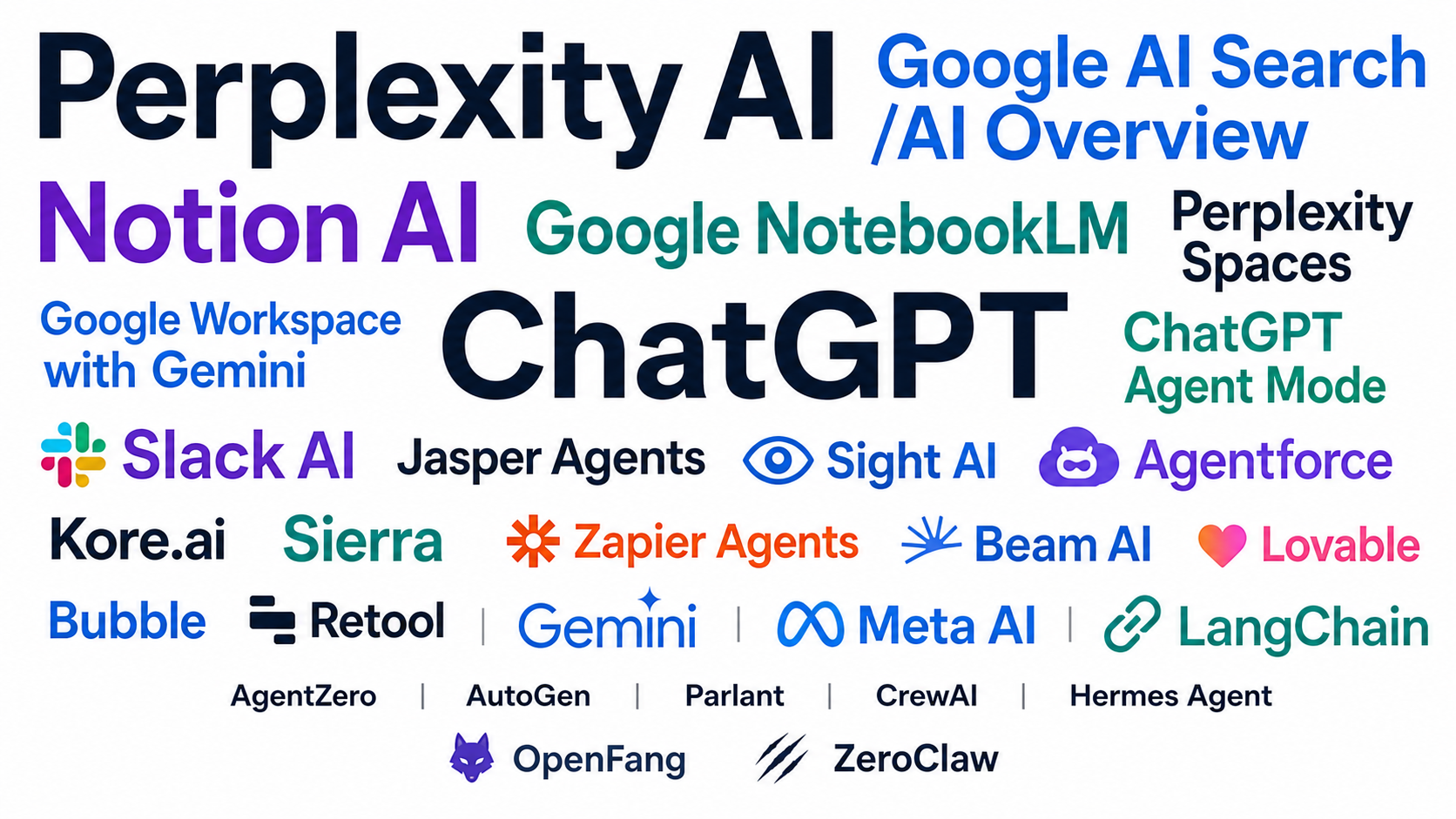
In 2024, the first capable Large Language Models emerged. Self-hosted Ollama with local model inference was one pattern, and using commercial vendors and models like OpenAI’s GPT or Anthropic’s Sonnet models. Several open-source projects started to create AI assistants, targeting working autonomously on tasks ranging from research to productivity and coding.
In my blog article series about LLMs, I wrote Universal Personal Assistant with LLMs as the last entry in December 2024. I had the goal to investigate agent systems like AutoGen, CrewAI, and AgentZero. But using these frameworks showed severe limitations: Tool calls did not function reliably, and a human operator needed to constantly shepherd the LLM invocation to stay on track. I did not write a single article following this experience.
In 2026, the AI agent paradigm is a technical reality, and it keeps evolving rapidly. Commercial products include agent-like capabilities in their products, from the universal ChatGPT, to knowledge organisation with Notion and web search with Perplexity. Open-source frameworks likewise evolved: Chat interfaces with session persistence like OpenWebUI, personal agent frameworks like OpenClaw and Hermes, and several coding tools like Droid, Kilo, and Pi.
Agents are here now. They autonomously read and compose e-mails, conduct research and write comprehensive overviews, and program web applications and apps.
In this ongoing blog series, agent applications and their capabilities will be the focus. Two goals are prevalent. First, to explore and categorize the (agentic) features of commercial products and open-source projects. Second, how to set up agentic tools and surrounding infrastructure like LLM proxies and observability tools.
This introductory blog post provides an overview of application types and concrete commercial and open-source tools.
While I’m fascinated by the capabilities of artificial intelligence tools and applications, crafting blog articles remains my personal skill. Every character, number, and symbol in this article was typed manually, with the exception of verbose copies from log messages and screenshots.
Commercial Tools
The space of commercial tools is enormous. While AI becomes embedded into many types of products, agentic capabilities are the focus in the following groups.
Research
Gathering information from several webpages, reading several texts, comparing and summarizing — this is a premier task for AI apps.
- Perplexity AI: Perplexity is an AI-powered search engine with different capabilities: Standard fast web search, and deep research for parallel fetching and comparison of several sources. You can select which model to use, enter text and voice, and instruct it to narrow down sources. Search processes and text generation happen fast, providing accurate results quickly, and always linking the relevant sources for verifying factual claims.
- Google AI Search/AI Overview: Google also extended its search capabilities with conversational AI. When used, information is synthesized from various sources, providing a quick overview of topics of interest. Follow-up questions can narrow down the results. AI Overview is offered as an installable app for mobile phones only, which provides integration with a phone’s native capabilities, including its camera for pictures or videos.
Knowledge Management
Knowledge management is concerned with organizing lists, notes, and texts into a coherent, structured format. Keeping this structure with editors requires structural integrity and strict rules to follow, while using a tool is dependent on the provider’s system, making exports difficult.
- Notion AI: Notion pages are structured documents accessible from the web or via dedicated app. Adding agents to these pages allows extended search capabilities via connectors, e.g. to external databases, or content improvements like summarization or text rewriting. Since agents can also query the complete workspace, context-aware suggestions can be produced, e.g. to reduce redundancy in notes. The specific strength of Notion is that agent invocation stays inside the workspace itself; no separate search or chat interface is required.
- Google NotebookLM: A Gemini-powered research assistant that performs retrieval-augmented generation over uploaded sources such as Docs, PDFs, Slides, and URLs, generating grounded summaries and explanations. It is especially useful when the source set is known in advance and the goal is to stay within those materials. A distinctive feature is source-grounded output that avoids drifting beyond the uploaded corpus.
- Perplexity Spaces: The Spaces feature is designed as a long-running, continuous session in which you can add sources, configure LLM invocation instructions, attach custom files and other data sources, and then start discussions structured as threads. Additionally, spaces can be shared with other people, allowing collaborative work on dedicated knowledge areas.
Productivity
Personal productivity is a very attractive area for agent applications. Organizing disjoint data sources, from task lists to calendars, from e-mails to note-taking apps, can be tedious if not structured rigorously. Agent apps provide organization and processes in spite of structural differences.
- Google Workspace with Gemini: Google apps remain at the frontier of productivity, already providing a tight integration between emails, documents, sheets, and task lists. Their Gemini model can be opened in any workspace app, providing immediate support by AI models. Alternatively, a Gemini chat can be used standalone, with full access to all information, making it seamless to e.g. let an e-mail be composed about the contents of several documents. Also, you can use this feature to generate texts and add them to documents.
- ChatGPT Agent Mode: ChatGPT is the premier interface for invoking LLMs in long, session-based conversations. The agent mode extends this capability, allowing a combined tool array for multi-step workflows, with tasks like web research, file editing, code execution, and connection to various third-party apps. Tasks can even be scheduled regularly, providing timed workflows.
- Slack AI: Slack is a standard communication tool, used in small businesses and enterprises alike. Integration of AI takes several forms. For channels, summaries can be generated. Inside a huddle, meeting notes can be summarized. And the canvas feature allows collaborative text editing.
Content Generation
While text generation and image generation are core capabilities in all aforementioned application areas, specialized domains require specific formats or need to follow rules.
- Jasper Agents: A complete platform for brand-specific content generation, including landing pages, blogs, and whole campaigns. It structures content generation into strict phases, and uses specialized agents for each step, with fixed guardrails and quality controls. It is also designed for collaborative work, allowing whole teams to structure and refine the workflow processes.
- Ema: The Enterprise Machine Assistant promises AI employees that can fill roles from customer support, sales, research, and HR. Workflow engines invoke agents autonomously, and allow connecting to various data sources, ensuring governance and system connectivity.
- Sight AI: An autonomous content-generation platform for researching, writing, and publishing SEO-optimized articles. Specialized agents partake in each workflow phase, and learn from their work. Published page rankings are monitored, their impact measured, and important findings stored in a knowledge graph that serves as a continuously evolving knowledge base for improving all publication aspects.
Sales and Support
These agents are tuned for CRM workflows, customer engagement, and service automation.
- Agentforce: Salesforce’s all-in-one solution for conversational agents that support all CRM processes. They can be employed as customer-facing chatbots, in back-office environments for customer support, and even for reaching out to resellers. All agents are highly customizable by the human team that invokes them.
- Kore.ai: Kore offers pre-made AI apps for banking, healthcare, retail, and HR, as well as a complex agentic platform with which to implement and add agents for any business processes. Their focus on and experience with enterprise customers results in well-integrated solutions, orchestrating multimodal workflows that include voice, chat, documents, and system access. A special feature is enterprise-grade virtual assistant deployment across many business functions.
- Sierra: Sierra provides brand-specific AI support agents for customer services across voice, webpage, and app channels. It handles both FAQ-style information access, and can also handle operational service flows, e.g. triggering returns or handling subscriptions. Their advertised strength is brand awareness, ensuring a coherent customer experience.
Workflow Automation
These agents orchestrate multi-step workflows and actions across apps and systems.
- Zapier Agents: Zapier has been at the forefront of automation for more than a decade. With their rich experience of inter-system connectivity, it is no surprise that adding agents provides a seamless experience. Many templates are available, resulting in seamless invocation of agents to summarize content or work autonomously. This allows for productive business automation, spawning agents to fulfil customer requests, file invoices, and more.
- Beam AI: Agentic process-automation platform whose agents interpret requests, make routing decisions, and automate workflows in support, sales operations, and HR. A standout feature is decision-making inside process flows, not just form-based task triggering.
Low-Code/Visual Coding
While dedicated coding agents output complex source code, the entry level into custom applications are visual editors, allowing non-technical users to implement complex logic.
- Lovable: AI-powered platform for creating full-stack web apps from natural-language prompts. It is especially helpful for fast prototyping and MVP creation. Users can start with a generic prompt, and then quickly refine generated results with follow-ups. Since its inception, capabilities like third-party system integrations were added, allowing the generated code to access these systems immediately.
- Bubble: A similar visual app builder with a focus on structured design workflows. Upon the initial prompts, design choices are presented, e.g. a set of features, or the structure of a webpage. The visual editor allows configuring these aspects, and then continuing with the prompt, or rewinding to an earlier version. It also rapidly expanded its capabilities with a third-party API connector, and opened a marketplace for plugins that can be integrated into its GUI.
- Retool: Low-code platform for internal tools that uses AI to generate applications from prompts while keeping visual editing, data bindings, and enterprise controls in place. It is particularly strong when apps must connect to business data, run securely, and evolve over time.
General-Purpose Assistant
These are broad assistants that handle many task types via chat, tools, and multimodal inputs.
- ChatGPT: General assistant for writing, coding, and research, with browsing and agent capabilities for multi-step tasks. It is flexible enough to act as both a conversational helper and a goal-directed autonomous agent with decision-making capabilities.
- Gemini: General assistant for search, reasoning, and productivity tasks, with multimodal support and strong workspace integration. It works well when users need one assistant across documents, mail, search, and visual inputs.
- Meta AI: The AI Assistant from Meta, accessible as a standalone web application, and also integrated into WhatsApp, Instagram, and Facebook. It allows seamless follow-up questions inside these apps, accessing user messages for rich, grounded context.
Open-Source Projects
An agent is a persistent, task-oriented process that has access to tools for editing files, connecting to external systems, and even shell commands in its environment. It also has a memory system, deriving context from several sessions/conversations, which also evolves the agent’s capabilities so as not to repeat mistakes.
Converging with the appearance of the first Large Language Models, early frameworks that provide single agents were developed. The evolution to multi-agent invocation is rather new, which required experience with agent memory consistency and fixed workflow handovers between the different processes.
Single-Agent Frameworks
- LangChain: Modular framework in which strict workflows with agent invocation are designed. Agents have access to their own memory, vector stores for RAG, and other data sources. The framework even features its own domain-specific language for composing complex workflows as functions with streaming support.
- AgentZero: A general-purpose personal assistant framework with persistent memory and tool-enabled execution. It uses its host system for tool execution, so tasks can incorporate commands, code, and file operations.
- AutoGen: Open-source framework for building AI agents and facilitating cooperation among multiple agents to solve tasks. It adds conversation programming and finite state machine patterns for controlling agent communication. AgentEval is integrated for task-oriented evaluation and iterative self-improvement. Has been declared in maintenance mode as of September 2025.
- Parlant: An agent harness for reliable customer-facing AI. Agent behavior is modeled as explicit rules and conditions, then selectively injects only the relevant guidelines into the prompt at runtime. This results in fine-grained, predictable control over a single agent.
Multi-Agent Frameworks
- CrewAI: Multi-agent orchestration framework centered on crews, agents, and tasks. The template method separates agents and tasks into YAML files, making projects easier to read and reuse. It also adds built-in tools, planning support, and training-oriented workflows.
- OpenClaw: The most famous open-source agent runtime that generated awareness for technical and non-technical users alike. It provides three strong pillars: First, support for more than 20 LLM providers, including OpenAI, Anthropic, the generic OpenRouter, and more. Second, tight integration into the Google and Apple ecosystems, connecting apps from mail to note-taking. Third, a multitude of channels to simplify communication with agents, including popular messaging platforms like WhatsApp and Telegram, and platforms like Slack and Discord. It is also known for fast-moving features, not always with system stability and backwards compatibility.
- Hermes Agent: A framework for self-improving agents with persistent memory and autonomous skill creation, using searchable past interactions and skill documents to adapt workflows across chat platforms. It is the number one contender to OpenClaw, valued for its stability and strict permission system to keep agents from harming their system.
- OpenFang: A fast-moving open-source agent operating system built in Rust, positioned as a more kernel-level, background-process style alternative to chat-first agents. It emphasizes autonomous execution, skill templates, and a command registry, geared toward reliable scheduling and long-running tasks. It is shipped as a single, production-oriented binary, reducing resource overhead significantly compared to frameworks based on interpreted programming languages.
- ZeroClaw: A compact, fully autonomous AI assistant infrastructure, emphasizing simplified practical deployments and channel connectivity. Its support for LLM providers and channels rivals that of OpenClaw, and its roots in Rust provide operational benefits, with a special focus on permissions to execute tools. An interesting feature is its hardware support to access communication protocols like I2C or serial interfaces, making it viable to be deployed on Raspberry Pi or ESP32 platforms.
Conclusion
In 2026, AI agents perform autonomous tasks in areas like productivity, research, content generation, and coding. This blog article gave a concise overview of both commercial tools and open-source projects in these realms. In the commercial space, the breadth from research to knowledge management, and from low-code to workflow automation, shows how much traction agents are developing. And the open-source projects show the steady progress from single-agent frameworks, requiring manual Python code with LLM invocations, to Telegram-controlled multi-agent environments with full access to the computer they run on.